JSCA holds discussions with representatives of justice system institutions, civil society, the academic sector and the entity’s alumni network in South America in order to develop its Strategic Plan

The Justice Studies Center of the Americas (JSCA) held four discussions with justice institutions, civil society organizations and members of academia in South America from May 2-6, 2022. The exchanges yielded numerous contributions for the design of its 2022-2025 Strategic Plan.
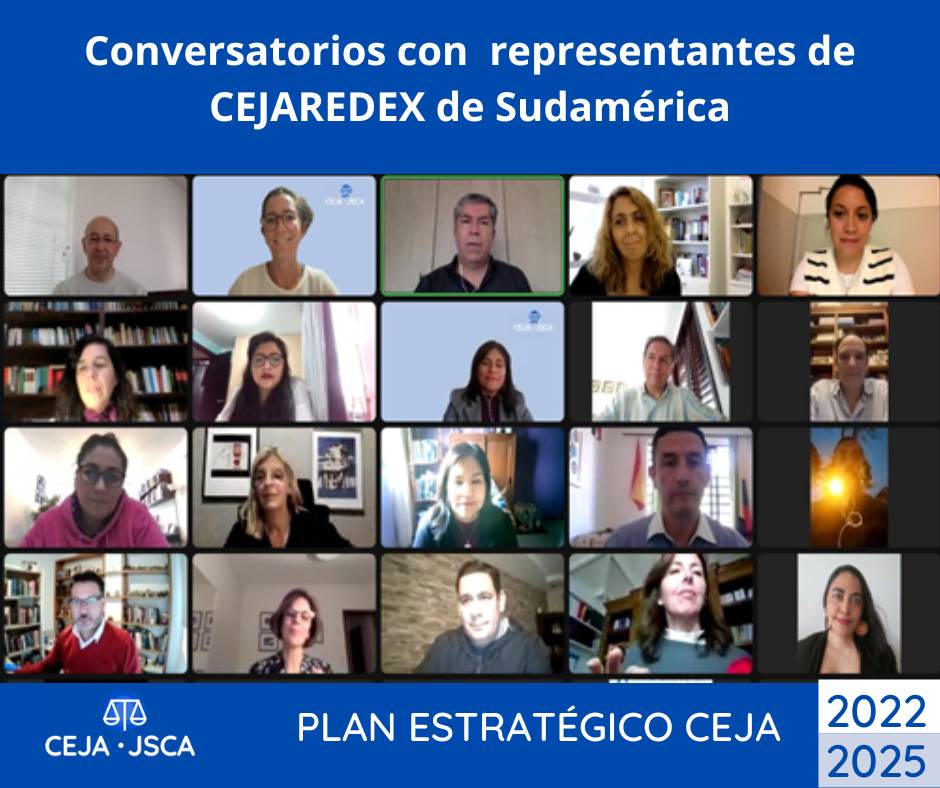
Over 100 people participated in the discussions, including representatives of justice system institutions such as judiciaries, ministries of justice, public prosecution services, public defense services, and police and prison institutions. They represented Venezuela, Colombia, Ecuador, Peru, Chile, Bolivia, Argentina, Paraguay, Uruguay, and Brazil. The participants included representatives of various civil society and academic organizations as well as members of JSCA’s alumni network.
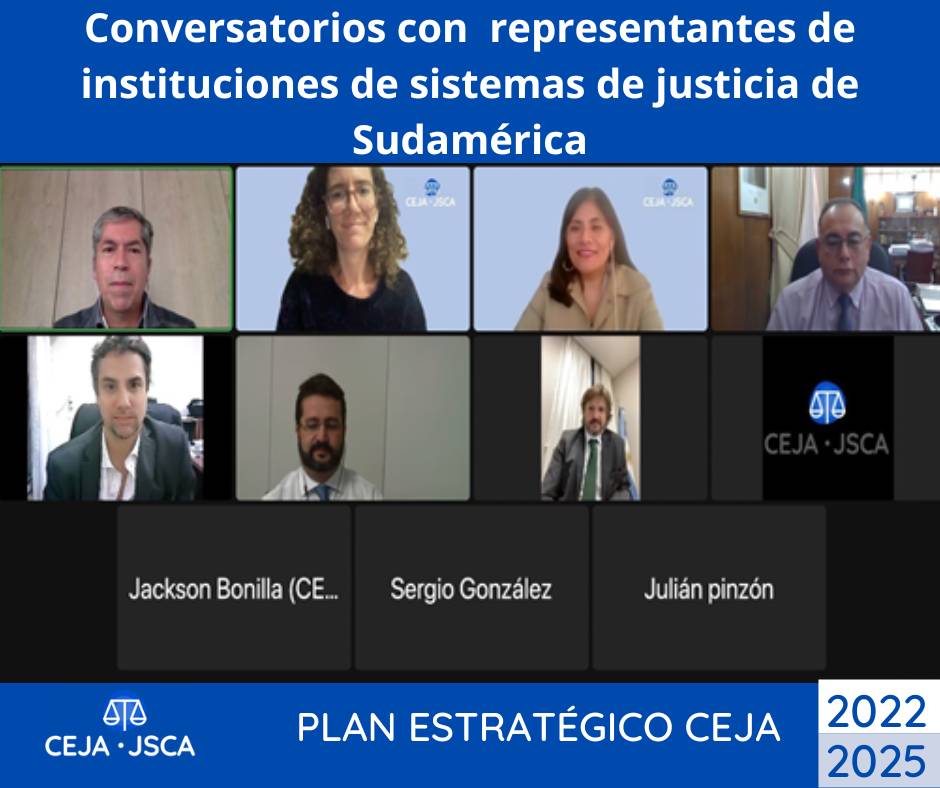
JSCA’s sub regional discussions are part of a broad participatory process designed to discuss the main challenges, issues, tools, lines of action and spaces for collaboration on the work that the Center will conduct in the coming years with key stakeholders.
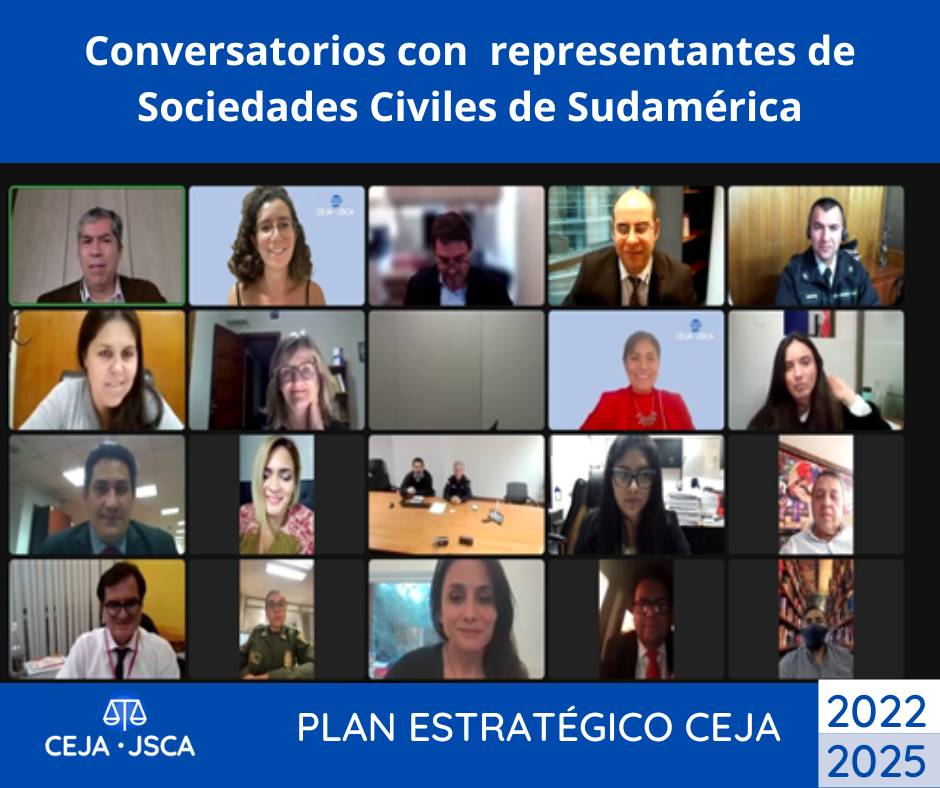
JSCA is grateful for the profound interest demonstrated by the individuals who participated in these discussions in contributing to the Center’s work by providing valuable information. This reaffirms the entity’s commitment to organizing all of the contributions received to develop its Strategic Plan in order to generate collaborative work related to strengthening justice in South America.

JSCA will hold discussions with the Caribbean, Canada and the United States in the coming weeks. JSCA will use the subregional perspective to address the specific priorities and challenges of subregions in the American continent.

JSCA reiterates its invitation to all interested institutions and operators to participate in the development of the 2022-2025 Strategic Plan by taking part in the Virtual Consultation, which will be available online until May 30.

Noticias relacionadas:

As part of the specialized training program “Improving Criminal Prosecution in Gender-Based Violence Cases in Latin America and the Caribbean,” JSCA held the second in-person session of the course in Trinidad and Tobago, creating a key space to strengthen the capacities of justice sector professionals in the country. 
The Justice Studies Center of the Americas (JSCA) will begin the first in-person session of the course “Specialized Training Program: Investigating Corruption by Following the Money,” a training initiative aimed at strengthening investigative capacities in corruption cases in Trinidad and Tobago. 
The Justice Studies Center of the Americas (JSCA/CEJA ) began on March 16th the implementation in Trinidad and Tobago of the international course “Investigating Corruption by Following the Money,” a training program aimed at strengthening investigative and prosecutorial capacities to address corruption cases in Latin America and the Caribbean. 
The Justice Studies Center of the Americas (CEJA), in collaboration with the Federal Foreign Office of Germany, continues the implementation of the course “Improving Criminal Prosecution in Cases of Gender-Based Violence in Trinidad and Tobago” aimed at strengthening the criminal justice response to gender-based violence in the country.
The Justice Studies Center of the Americas (CEJA), with the support of the German Federal Foreign Office, officially launched in Trinidad and Tobago the course “Improving Criminal Prosecution and Resocialisation in Cases of Gender-Based Violence in Latin America and the Caribbean.” 
The President of the Supreme Court of Chile, Justice Gloria Ana Chevesich Ruiz, held a formal meeting with the Executive Director of the Center for Justice Studies of the Americas (CEJA), during which both authorities addressed matters of shared interest related to the strengthening of justice systems and regional cooperation.