Specialized Course on the Investigation and Prosecution of Gender-Based Violence Concludes in Trinidad and Tobago

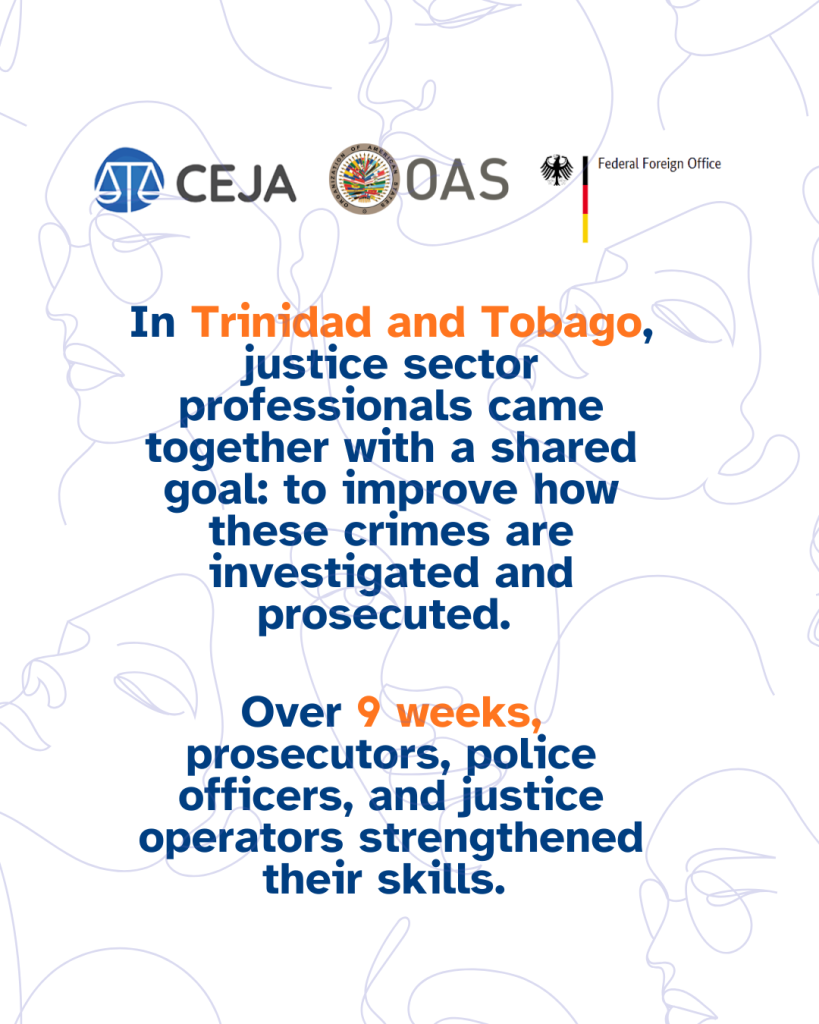
On April 17, the Justice Studies Center of the Americas (JSCA) held the closing session of the course “Improving Criminal Prosecution in Cases of Gender-Based Violence in Trinidad and Tobago”, marking the completion of this specialized training programme. 

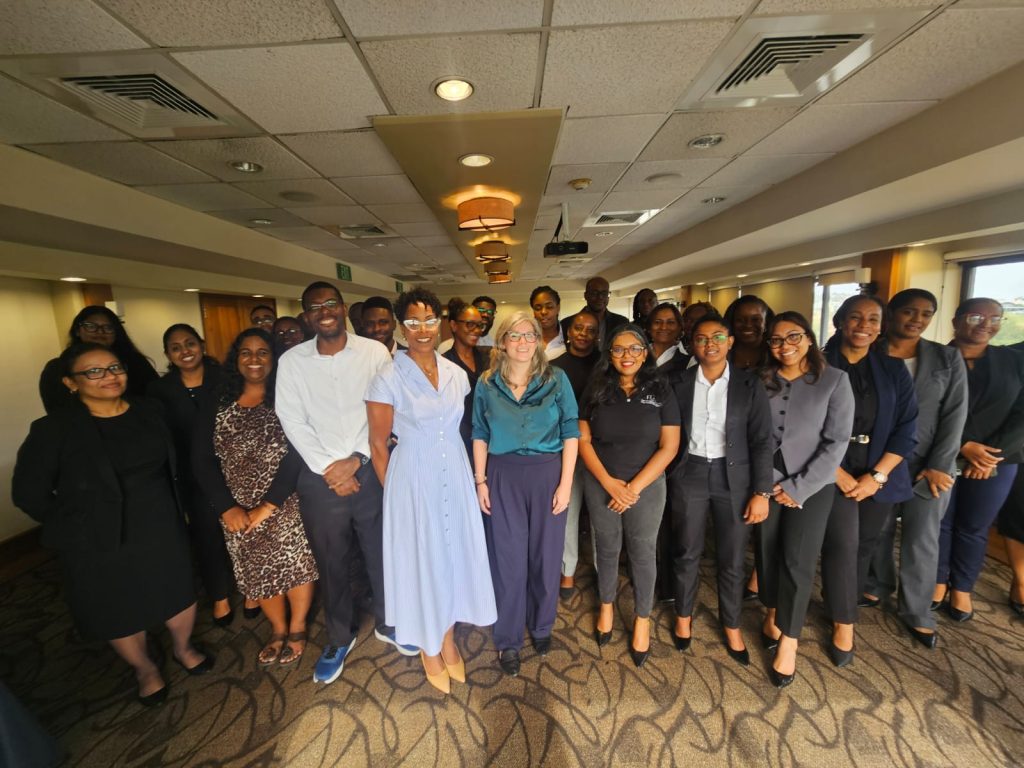
The session brought together nearly 40 participants from key justice sector institutions, including the Office of the Attorney General, the Office of the Director of Public Prosecutions, the Trinidad and Tobago Police Service, and civil society organisations. The event provided an opportunity to exchange experiences and strengthen institutional capacities in responding to gender-based violence. 

The closing session was led by expert Kim Sealy and included the participation of the Embassy of Germany in Trinidad and Tobago, represented by the Head of Culture, Jessica Cohoe, who highlighted the importance of international cooperation in strengthening justice systems across the region. 

A diploma recognizes participants who successfully completed the course their commitment to enhancing institutional responses to gender-based violence. 

Strengthening the justice system’s response 

The course aimed to strengthen capacities in the investigation, prosecution, and sanctioning of gender-based violence in the Caribbean, with a strong focus on addressing victims’ needs throughout their interaction with the justice system. 
Over nine weeks, the programme combined virtual and in-person sessions, enabling participants to review legal frameworks, analyse operational challenges, and identify best practices from a gender perspective. 

Key topics addressed in the programme included: 

  • Intake of complaints and investigation of gender-based violence cases 
  • Risk assessment and implementation of protection measures 
  • The use of alternative resolutions methods and summary proceedings 
  • The development of a case theory 
  • Gender-sensitive litigation in criminal proceedings 

These topics were delivered through practical, hands-on methodology, incorporating case analysis, participatory exercises, and digital tools to support real-world applications.

Noticias relacionadas:

At the 56th General Assembly of the Organization of American States (OAS), the Member States elected Patricia Elizabeth Gámez (Guatemala) and Santiago Pereira Campos (Uruguay) as new members of the Board of Directors of the Justice Studies Center of the Americas (CEJA/JSCA).
The Justice Studies Center of the Americas (JSCA/CEJA) successfully concluded the second edition of its regional program, “Artificial Intelligence and Justice Systems: Ethical Perspectives, Regulations, and International Experiences,” an initiative that brought together more than 40 participants from across the region interested in understanding the impact of artificial intelligence (AI) on the administration of justice.
Across the Americas, transforming justice remains one of the greatest challenges of our time. It is not only about modernizing institutions, but also about building systems that are more efficient, inclusive, and people-centered. 
On April 21, the final session of the course “Investigating Corruption by Following the Money” was held at the Office of the Director of Public Prosecutions in Trinidad and Tobago, marking the conclusion of this specialized training in the country. 
Regional cooperation on justice and citizen participation continues to advance through a new meeting led by the Organization of American States, which brought together in Chile the Center for the Study of Justice of the Americas with civil society organizations, academia, and justice system stakeholders.