Colombia: CEJA leads workshop to strengthen Alternative Dispute Resolution Methods

The Justice Studies Center of the Americas (CEJA), in collaboration with Colombia’s Ministry of Justice and Law and the International Development Research Centre (IDRC) of Canada, organized a workshop to present key recommendations to strengthen Alternative Dispute Resolution Methods (ADR) in Latin America, with a focus on Colombia.
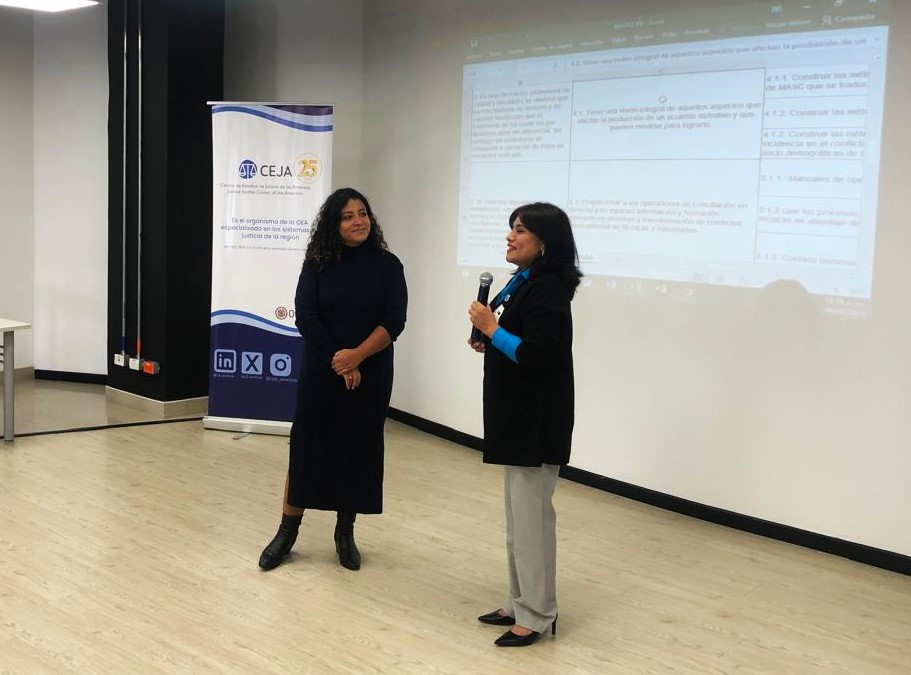
The event brought together more than 30 officials from the ADR Directorate and the Vice Ministry of Justice.

Dr. Helen Ortiz, Vice Minister for Justice Promotion, opened the workshop and emphasized the importance of CEJA’s recommendations to revitalize ADR in the country. She highlighted the essential role these methods play in ensuring access to justice, especially for women and vulnerable populations.

“The strengthening of ADR in Colombia is crucial to promoting peace and ensuring access to justice. It is essential to have strategies that consolidate these methods, integrating both public vision and the needs of ADR operators and citizens,” stated Mateo Vásquez, CEJA researcher in Colombia, who led the participatory process of the workshop.
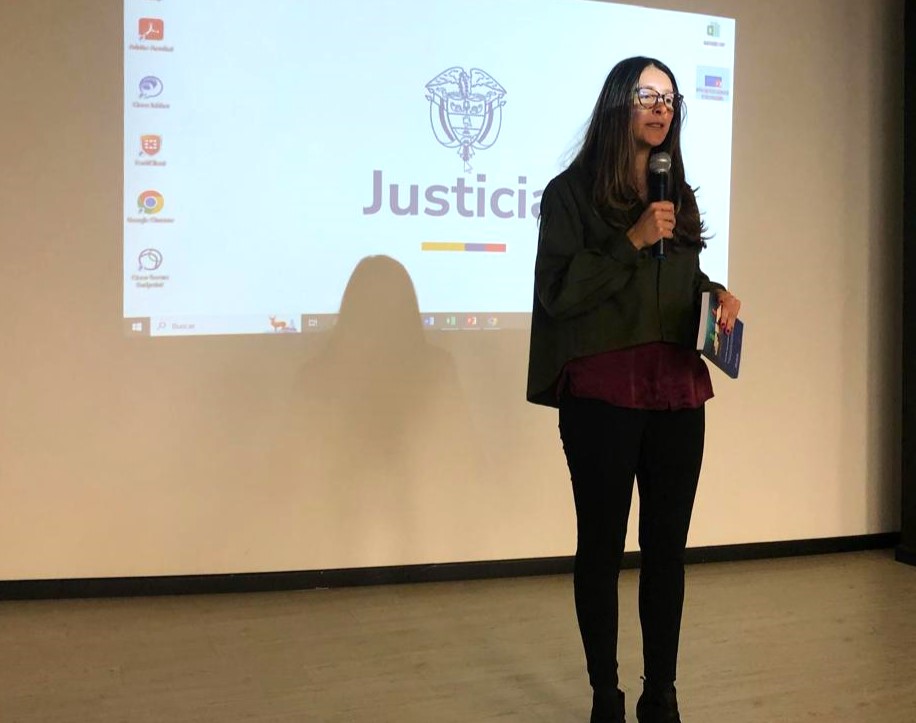
During the event, CEJA presented recommendations focused on improving data collection, developing new management tools, replicating best practices in public and private conciliation centers, and increasing the effectiveness of conciliation agreements.

Nataly Ponce Chauca, Executive Director of CEJA, stressed the importance of ensuring the effective enforcement of conciliation agreements. She emphasized that public and private conciliation centers must adhere to performance standards that include information on effective conflict resolution.

Dr. Adriana Ferrer, Director of ADR Methods at Colombia’s Ministry of Justice and Law, closed the event by thanking CEJA for its contributions and committing to incorporating the recommendations into ongoing efforts.

Noticias relacionadas:

As part of the specialized training program “Improving Criminal Prosecution in Gender-Based Violence Cases in Latin America and the Caribbean,” JSCA held the second in-person session of the course in Trinidad and Tobago, creating a key space to strengthen the capacities of justice sector professionals in the country. 
The Justice Studies Center of the Americas (JSCA) will begin the first in-person session of the course “Specialized Training Program: Investigating Corruption by Following the Money,” a training initiative aimed at strengthening investigative capacities in corruption cases in Trinidad and Tobago. 
The Justice Studies Center of the Americas (JSCA/CEJA ) began on March 16th the implementation in Trinidad and Tobago of the international course “Investigating Corruption by Following the Money,” a training program aimed at strengthening investigative and prosecutorial capacities to address corruption cases in Latin America and the Caribbean. 
The Justice Studies Center of the Americas (CEJA), in collaboration with the Federal Foreign Office of Germany, continues the implementation of the course “Improving Criminal Prosecution in Cases of Gender-Based Violence in Trinidad and Tobago” aimed at strengthening the criminal justice response to gender-based violence in the country.
The Justice Studies Center of the Americas (CEJA), with the support of the German Federal Foreign Office, officially launched in Trinidad and Tobago the course “Improving Criminal Prosecution and Resocialisation in Cases of Gender-Based Violence in Latin America and the Caribbean.” 
The President of the Supreme Court of Chile, Justice Gloria Ana Chevesich Ruiz, held a formal meeting with the Executive Director of the Center for Justice Studies of the Americas (CEJA), during which both authorities addressed matters of shared interest related to the strengthening of justice systems and regional cooperation.