The 58th session of the Board of Directors of the Justice Studies Center of the Americas (CEJA) was held last December and was attended by board members María Victoria Rivas (President, Paraguay), Benjamín Berger (Vice President, Canada), Jenny Murphy (United States), Cecilia Barrios (Guatemala), Nadia Franco (Panama), Nicolás Soler (Argentina) and Bruno Novoa (Peru).
During the meeting, the new Council authorities were elected for the period (2025-2026), which began on January 1, 2025. Bruno Novoa, from Peru, was elected as the new President and Nadia Franco, from Panama, as Vice President.
A certificate of recognition for her work was also presented to Councilor Jenny Murphy, who concluded her term of office on December 31, 2024.
At this year-end session, Nataly Ponce, JSCA’s Executive Director, presented the Activity and Financial Reports for 2024 and the Action Plan and Budget for 2025, which were approved by the board members.
Also present as an observer was José Suing Nagua of Ecuador, who was elected to the Board during the last OAS General Assembly and took office on January 1, 2025.
The JSCA Board of Directors is composed of seven members elected in their personal capacity by the OAS General Assembly from among the candidates proposed by its member states. Its functions include supervising the management of the Executive Directorate, approving work plans and budgets.
New Officers of the JSCA Executive Council 2025-2026
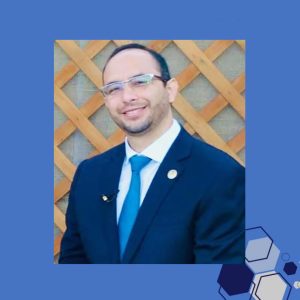 Bruno Novoa (Peru) is a lawyer from Universidad Nacional de Cajamarca and holds a Master’s degree in Constitutional Law from Pontificia Universidad Católica del Perú. He has a specialization in Administrative Law from the Pontificia Universidad Católica del Peru and has taken refresher courses in “Justice” and “American Government” at Harvard Law School, HarvardX and Harvard Extension School, as well as in “Comparative equality and anti-discrimination Law” at Stanford online.
He served as a consultant for the Center for Justice and Human Rights Studies of the Ministry of Justice and Human Rights, Academic Director of the Academy of the Magistracy and Director of the Judicial Research Center of the Judicial Branch, where he served as representative before the Technical Council for the Reform of the Peruvian Justice System.Currently, he is an advisor to public entities and teaches Constitutional Law and Human Rights at prestigious universities. He is also a member of the Board of Directors of the Peruvian Association of Constitutional Law.
 Nadia Franco (Panama) holds a degree in Law and Political Science from the University of Panama.She is a specialist in Criminology Studies from the Institute of Criminology of the University of Panama.
Among other accreditations, she has a postgraduate degree in Higher Education from the Universidad Latina de Panamá, Master in Legal Practice from the Universidad de Salamanca, Master in Law with emphasis in Criminal Law from ULACIT, Master in Procedural Law from the Universidad Americana de Panamá and Postgraduate in Criminal Procedural Law with mention to the Principles, Guarantees and Constitutional Rules that underlie the Accusatory System from INEJ. Doctorate in Law from the University of Salamanca.
Currently, she is a professor of the Bachelor’s Degree in Law and Political Sciences, Master’s Degree in Procedural Law, Master’s Degree in Adversarial Criminal System, Master’s Degree in Labor Law and Master’s Degree in Commercial Law at ISAE University.Professor of Criminal Procedure Law at the Centro Regional Universitario de San Miguelito (CRUSAM) of the University of Panama and coordinates the Master’s Degree in Law with Specialization in Criminal Law at the same center.