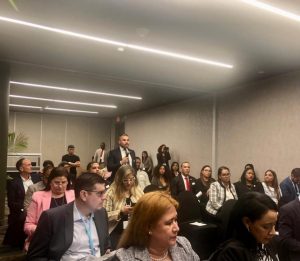
 On September 26 and 27, the conference on reducing corruption, “Integral Anti-Corruption Approach in Latin America and the Caribbean: Strategies and Practices for Prevention and Prosecution”. Held in Santo Domingo, Dominican Republic, this conference was organized by the German Federal Foreign Office.
The event had two thematic areas: 1) Working on a comprehensive approach to corruption and 2) Addressing regional and international mechanisms to fight corruption.
The first line focused on the prevention, investigation, prosecution, and participation of women in the fight against corruption. Collectively participants answered the question of how greater representation of women and more diverse governance structures contribute to reducing this phenomenon. The second line addressed the critical analysis of lessons learned, good practices and results obtained, strengths and weaknesses of inter-institutional cooperation between national prosecutors’ offices and the challenges for the implementation of international investigative mechanisms, and tribunals for the prosecution of corruption.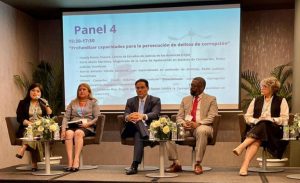
JSCA, through its Executive Director Nataly Ponce, participated in Panel 2, “Comprehensive Anti-Corruption Policy in the Dominican Republic and Latin America and the Caribbean” and Panel 4, “Deepening Capacities for the Prosecution of Corruption Crimes”. These panels addressed key factors to curb corruption, best practices, effective anti-corruption mechanisms, challenges and limitations of the institutions in terms of evidence, expediting criminal cases of money laundering, and forfeiture of ownership.
JSCA also participated in the “Workshop on Best Practices in the Investigation and Prosecution of Corruption Cases” which covered topics such as practices that improve the chain of custody of evidence, successful methods for the protection of witnesses and collaborators in an investigation, ways to expedite the investigation of cases, and i strengthening physical and legal protections for people who are involved in corruption cases.
The event was attended by authorities from different institutions of the Dominican Republic, such as the Vice-Presidency, the Ministry of Economy, Planning and Development, and the Attorney General’s Office. Authorities from the Court of Appeals in Corruption Matters of the Judiciary of Honduras, delegations from the European Union, authorities from Guatemala and representatives of organizations such as the Deutsche Gesellschaft für Internationale Zusammenarbeit (GIZ) also participated.
This conference strengthened ties between JSCA, the German Federal Foreign Office and GIZ.