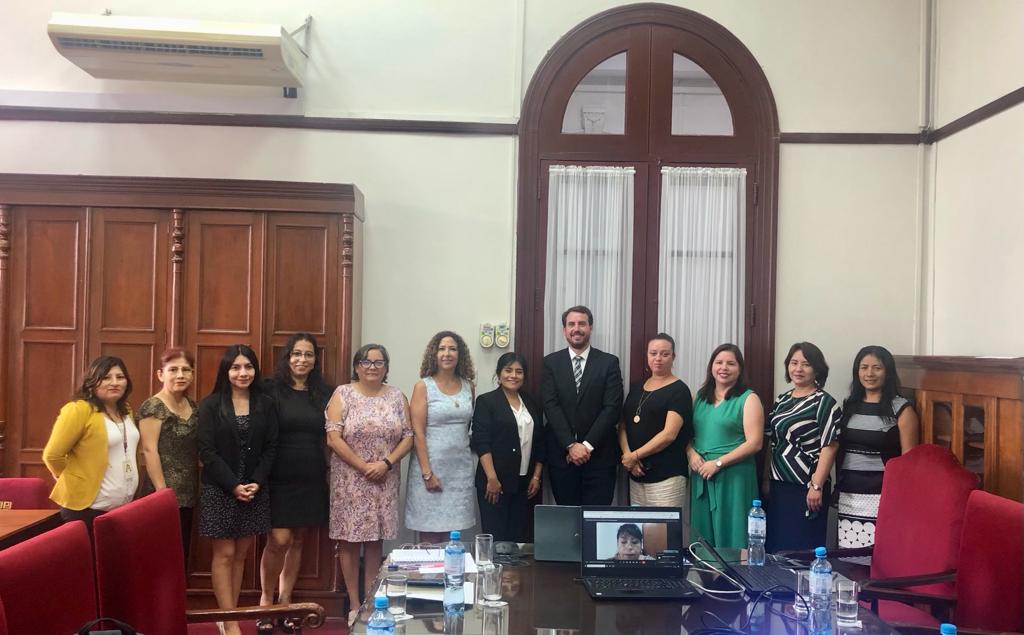
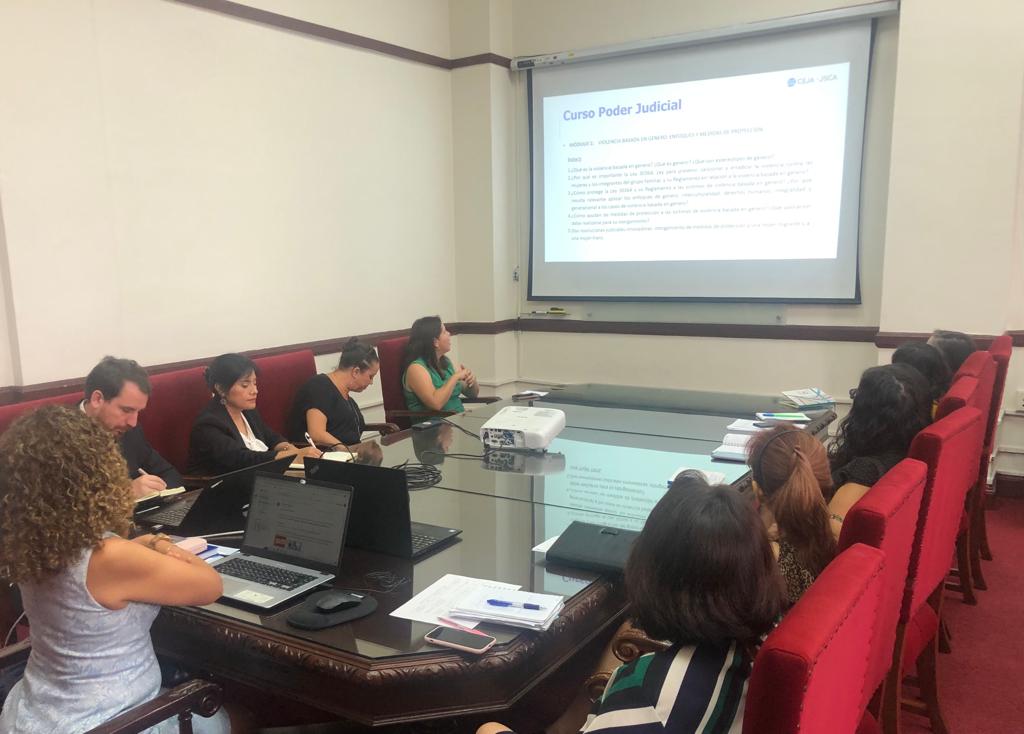
 In the framework of the development of training courses for the integration of a gender perspective in criminal prosecution for operators of Peru’s National Specialized Justice System for the Protection and Punishment of Violence against Women (SNEJ), carried out thanks to the collaboration of the German Ministry of Foreign Affairs and the GIZ agency, JSCA presented to the country’s Judicial Branch and Public Prosecutor’s Office the content that will be addressed in the courses for these institutions. Both institutions expressed their gratitude, noting that the course meets their expectations and responds to the needs of their officials.
 JSCA also conducted a focus group with human rights defenders in Peru’s Ministry of Justice and Human Rights in order to learn about their training needs in terms of the gender perspective in the exercise of their functions for the due protection of victims of gender-based violence.
These courses will be implemented during the second semester of the year 2023.
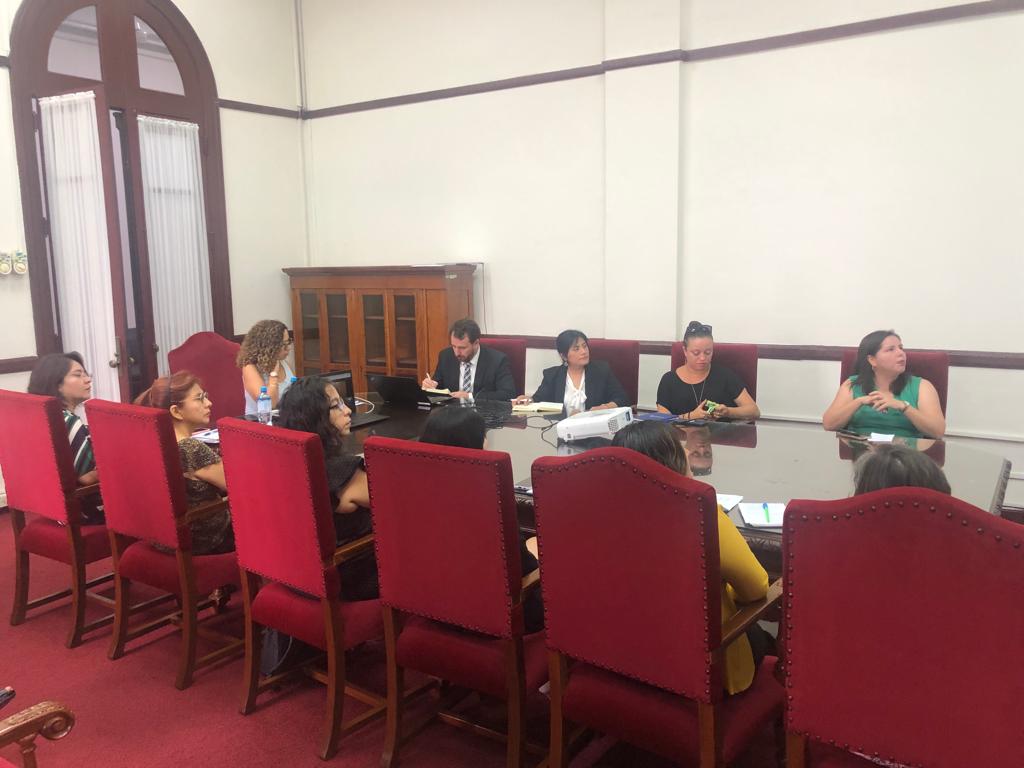 JSCA, in collaboration with GIZ, is developing a series of courses to achieve the effective incorporation of the gender approach in criminal prosecution in the region. This includes a regional course as well as courses adapted to the local realities of different countries.
The Justice Studies Center of the Americas (JSCA) is an intergovernmental body of the Inter-American System with technical and operational autonomy, created by the OAS General Assembly in 1999, whose mission is to support the processes of reform and modernization of the systems justice in the Americas.
JSCA provides technical assistance to governments, judiciaries, public ministries and other justice institutions; prepares technical studies and generates empirical evidence; facilitates cooperation processes at the regional level; and provides specialized training to justice policymakers and operators in the countries of the Americas.