
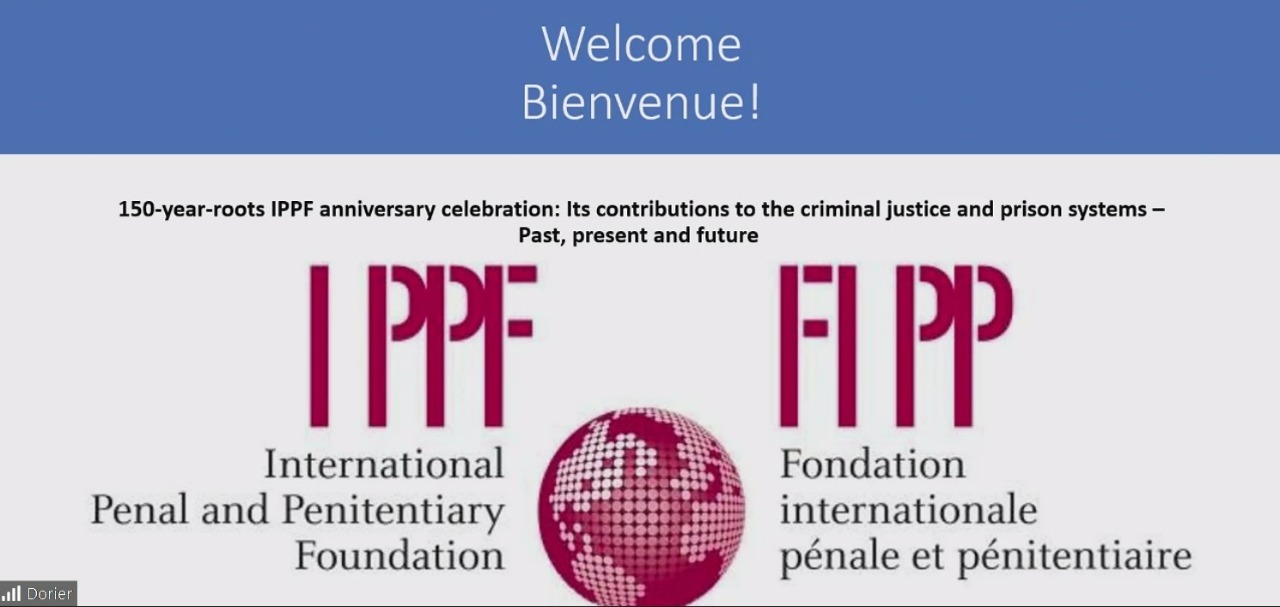
The President of the Board of Directors of the Justice Studies Center of the Americas (JSCA), Jenny Willier Murphy, participated today on behalf of JSCA in the International Penal and Penitentiary Foundation’s 150th anniversary, which is celebrating the Foundation’s past, present and future contributions to criminal justice and prison systems.
President Jenny Willier Murphy introduced JSCA and the institution’s mandate. In addition, she shared relevant data on the prison situation in Latin American countries and presented JSCA’s work in the area of criminal justice and prison systems in the region, including studies, technical assistance and cooperation, and training.
It was emphasized that prison overcrowding is a constant in Latin America and that in this regard it is essential to reassess criminal justice systems, especially preventive detention. Latin American states should promote data collection and information analysis from inside prisons. It is imperative that decision-makers design, implement and evaluate prison policies based on evidence.
Finally, the President of the JSCA Board of Directors presented the objectives, cross-cutting themes and priority issues of the new JSCA Strategic Plan 2022-2026. She highlighted the improvement of criminal justice and prison systems, in accordance with human rights standards and with a gender perspective, as one of the central themes on which JSCA will work.
The Justice Studies Center of the Americas (JSCA) is an inter-governmental agency with technical and operational autonomy that was established by resolution of the General Assembly of the Organization of American States (OAS) in fulfillment of the mandates of the Plan of Action of the Second Americas Summit (Santiago, April 1998) and the recommendations adopted during the Meetings of Ministers of Justice or Other Ministers , Prosecutors, and Attorneys General of the Americas (REMJA).
JSCA provides technical assistance to governments, judicial branches, public prosecution services, and other justice institutions; develops technical studies and generates empirical evidence; facilitates the exchange of information and best practices at the regional level; and provides specialized training to justice sector operators and public policymakers in the countries of the Americas.