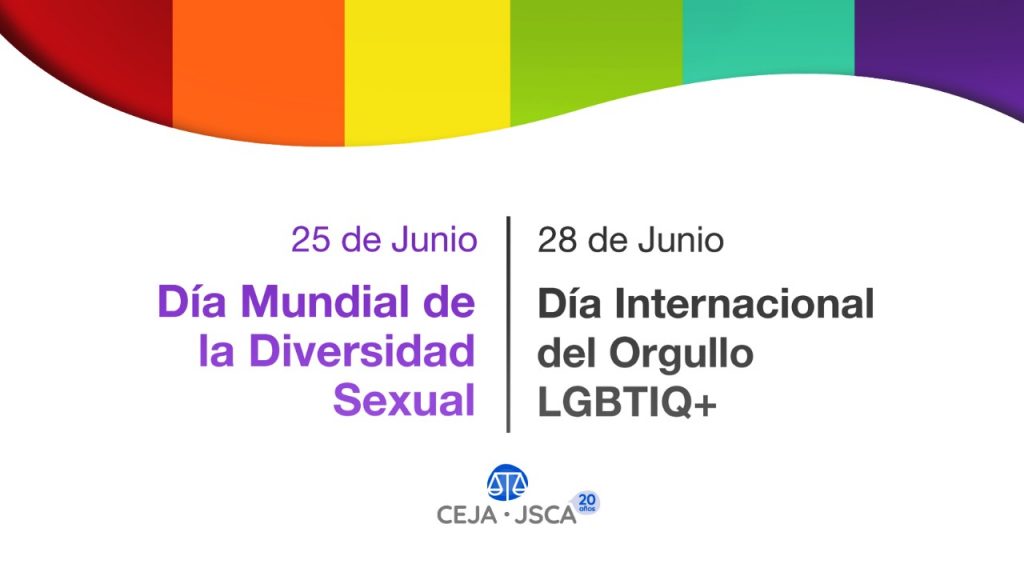
World Sexual Diversity Day and International LGBTIQ+ Pride Day are celebrated June 25 and 28, respectively, to commemorate the Stonewall riot. The incident, which took place in the United States in June 1969, has been recognized as the first major milestone in the contemporary Western movement for the rights of lesbian, gay, bisexual, transgender, intersex and queer people. Over the past 50-plus years, significant progress has been made to protect the rights of members of LGBTIQ+ communities, but many challenges remain.
- Latin America presents high rates of violence against LGBTIQ+ individuals, particularly transgender men and women. Over 80% of trans murder victims are under the age of 35. Lesbian women also face many attacks, and many more go unreported according to IACHR statistics.[1]
- A survey of LGBTIQ+ people in Peru showed that 11.5% had suffered some sort of discrimination in their professional lives. Some were not paid what they had been promised (33.3%), some were made to work day and night (30.8%) and some were the victims of threats or verbal or sexual assault (24.9%) (Publimetro, 2018).
- In Chile, the Constitutional Court rejected a request that would have opened the door to marriage equality and legal recognition of the children of same-sex couples. The argument used was that “this could lead to intolerable extremes (…) like the polygamous marriages in Muslim countries, child marriage in African countries, marriages arranged by parents in Japanese society, and the mass weddings held by the Moon sect in South Korea, among others.” (Sentence No. 7774-2019)
- During the COVID-19 pandemic, the differentiated restrictions on movement of men and women adopted by governments like that of Guatemala have led to discrimination and endanger the health and wellbeing of LGBTIQ+ people based on their identity and/or gender expression. They have been refused services at distribution sites and in banks and healthcare facilities. In some cases, they have been harassed by the police for “being where they don’t belong” (Caribe Afirmativo, 2020).
- Similar measures have been introduced in Panama, where a transgender human rights activist was detained by the police while she was distributing food to the poor (IACHR, 2020).
- In Peru, transgender women have suffered physical and verbal abuse by members of law enforcement. In one incident, they were forced to repeat phrases that deny their gender identity, such as “I want to be a man.” This happened just weeks after the IACHR ruling in the case of Azul Rojas Marín v. Peru, which found in favor of the complainant who alleged that the police there tortured and brutalized a trans woman.
The inequities and discrimination that members of LGBTIQ+ communities continue to suffer in Latin America and the Caribbean have been exacerbated by the COVID-19 crisis, leaving them on the margins of public policies and preventing them from accessing justice even though they are one of the most at-risk groups. In fact, there are so many concerning cases in the IACHR report that the entity issued specific recommendations to states in order to guarantee the rights of members of this community in Resolution 1/2020. These include strengthening the systems that can be used to file complaints and increasing efforts to ensure access to justice during the health crisis. As such, on World Sexual Diversity Day and International LGBTIQ+ Pride Day, JSCA reaffirms its commitment to the gender perspective and human rights approach. We call on all individuals involved in justice administration to actively participate in guaranteeing the rights of LGBTIQ+ people, applying a gender perspective in all proceedings and eradicating discrimination based on sexual orientation, gender identity and/or gender expression.
[1] http://www.oas.org/es/cidh/multimedia/2015/violencia-lgbti/registro-violencia-lgbt.html