
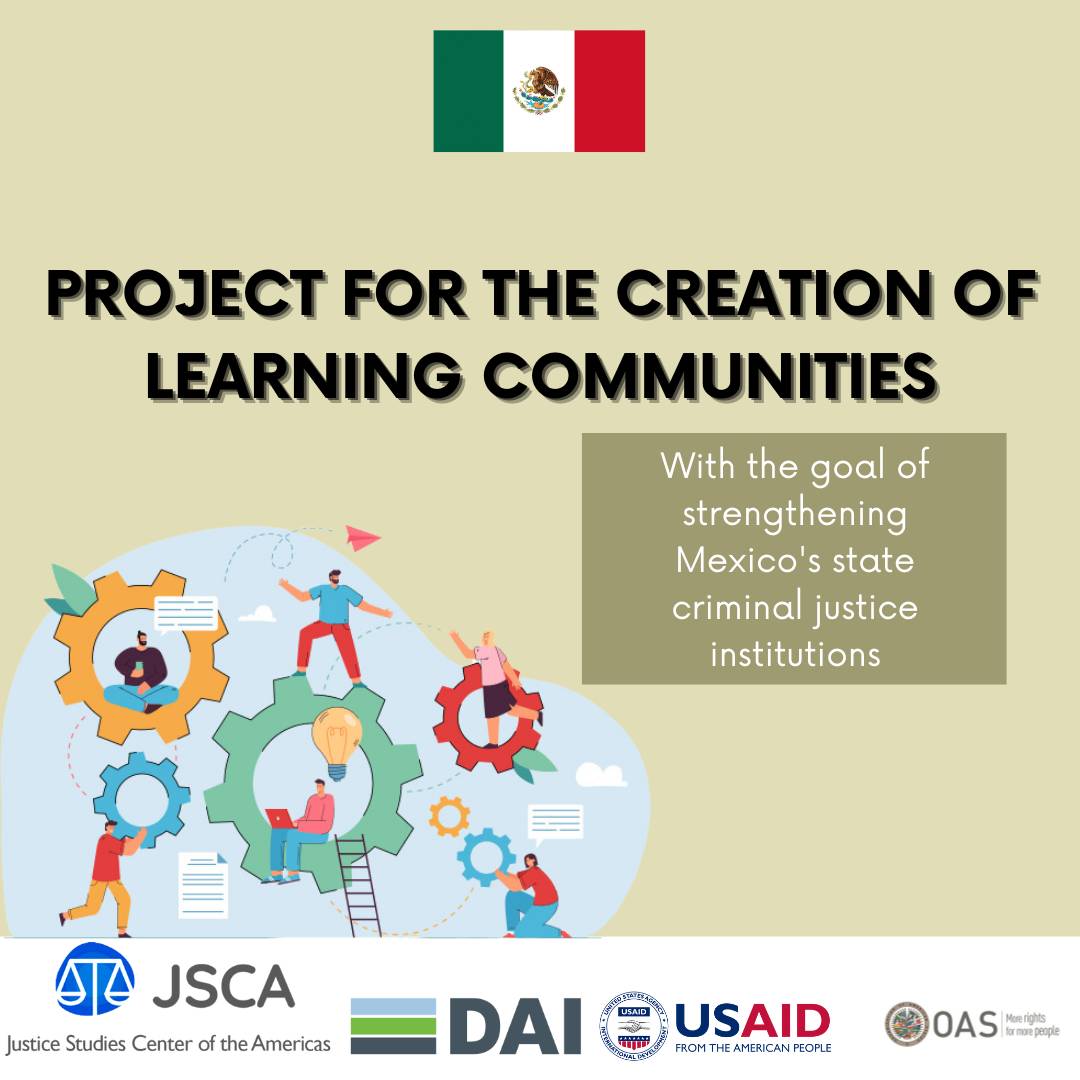
 The Justice Studies Center of the Americas (JSCA), in partnership with DAI Global LLC under the USAID-funded ConJusticia program, will implement an innovative project to create learning communities on strategic criminal prosecution, investigation, litigation, criminal analysis and court management.
JSCA will design the methodological and pedagogical route for the functioning of the learning communities, organize a program of six webinars with a collaborative and participatory approach for the exchange of experiences and innovative practices in strategic criminal prosecution, investigation and litigation; criminal analysis and court management, develop didactic materials, develop and implement a virtual training program in strategic criminal prosecution for key actors of the criminal justice system.
Subscribe to the JSCA newsletter here and follow the social networks to learn about the implementation of this and other projects with a people-centered justice approach in Latin America and the Caribbean.
The Justice Studies Center of the Americas (JSCA) is an intergovernmental body of the Inter-American System with technical and operational autonomy, created by the OAS General Assembly in 1999, whose mission is to support the processes of reform and modernization of the systems justice in the Americas.
JSCA provides technical assistance to governments, judiciaries, public ministries and other justice institutions; prepares technical studies and generates empirical evidence; facilitates cooperation processes at the regional level; and provides specialized training to justice policymakers and operators in the countries of the Americas.