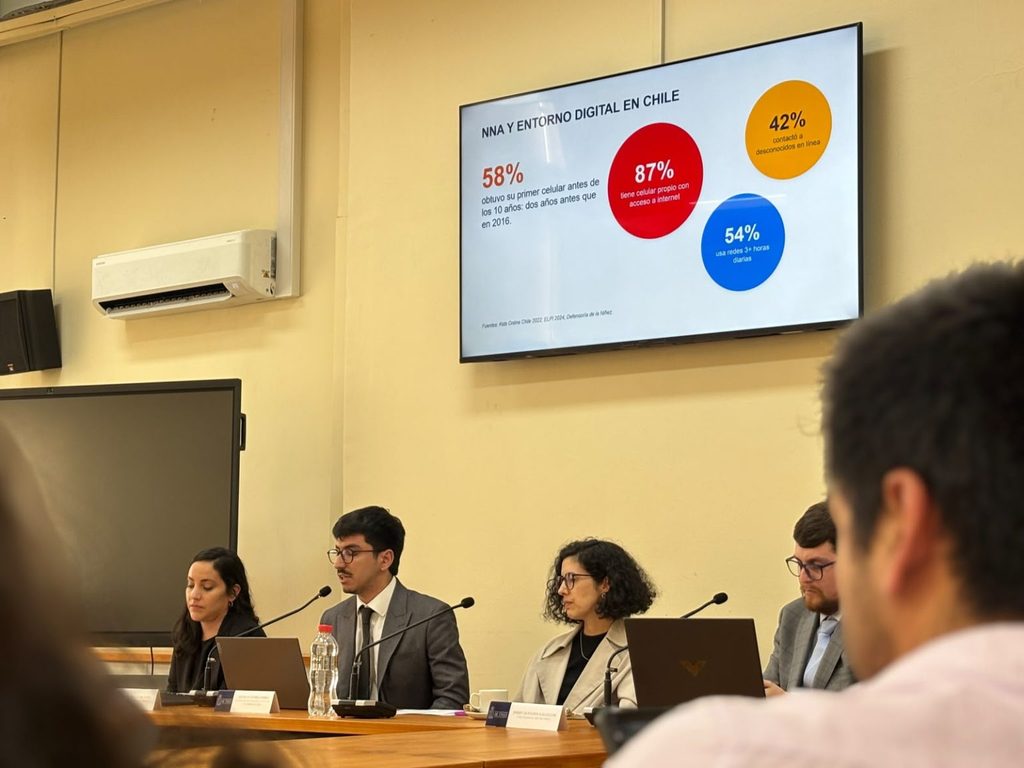
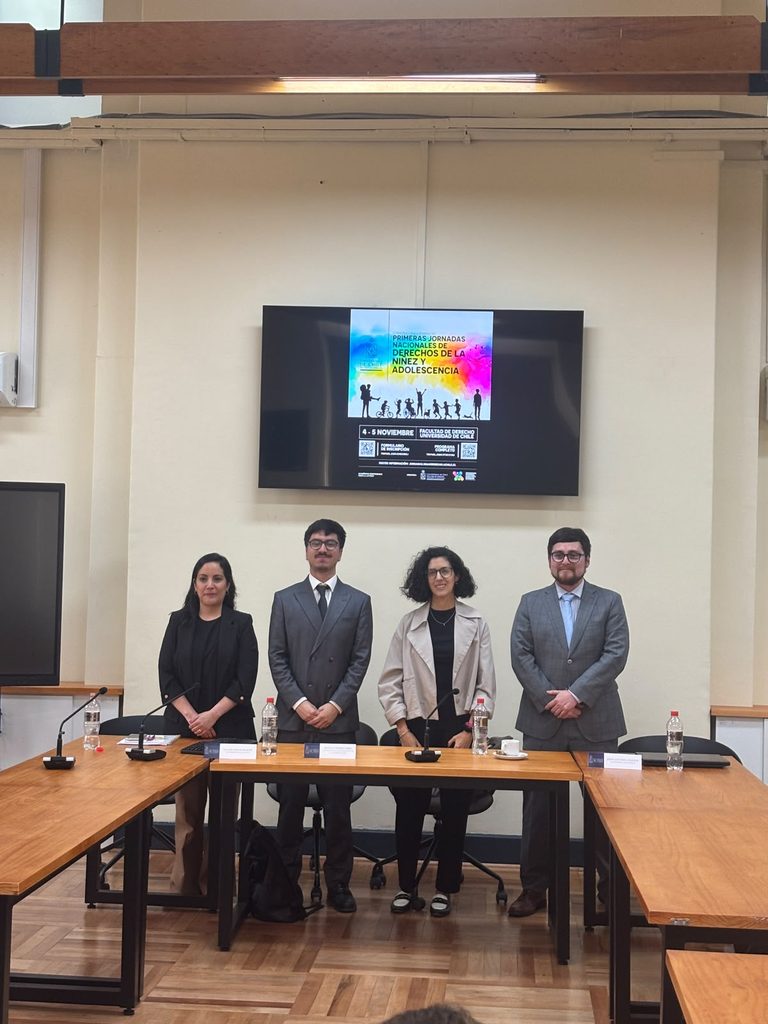
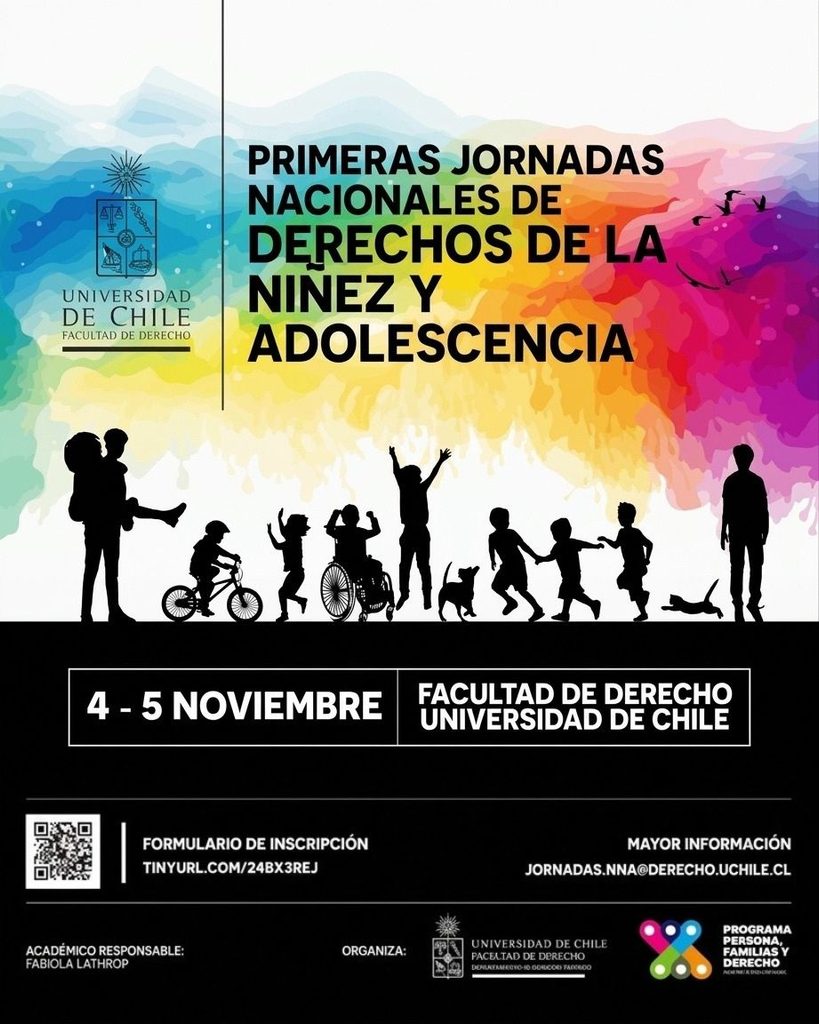
This was one of the central questions addressed by Kevin Gutiérrez Parra, a researcher at the Justice Studies Center of the Americas (CEJA), during the First National Conference on the Rights of Children and Adolescents, held on November 4 and 5 and organized by the Department of Private Law at the University of Chile.
The researcher participated as a speaker on Thursday, November 5, in Session 7C, with a presentation entitled “Social Media Regulation and Evolving Capacities: International Experience, Risks, and Challenges.”
Gutiérrez presented a comparative overview of measures adopted or under consideration in different countries to regulate children’s and adolescents’ access to digital platforms.
The presentation identified a global trend: more than 20 countries have proposed or adopted age-based restrictions on access to social media. The regulatory models examined included those of the United Kingdom, Australia, and Brazil. It also explored the tensions between general prohibitions and the principle of evolving capacities, which recognizes children’s and adolescents’ ability to exercise their rights in accordance with their age and maturity.
The Australian Case and the Limits of Restrictions
One of the examples examined was Australia, where 4.7 million accounts were deactivated during the first month of implementation of the regulation. However, data presented for the first three months showed that a significant proportion of children under the age of 16 continued using the platforms, creating new accounts or circumventing access controls.
It was also reported that 26% of children between the ages of 13 and 15 continued to use TikTok, just one percentage point lower than before the measure came into effect.
These findings raise questions about the ability of age-based restrictions to reduce digital risks, particularly when they are not accompanied by additional measures for prevention, oversight, and platform accountability.
Chile: The Debate Between Protection and Evolving Capacities
The presentation also addressed the legislative debate in Chile, where the National Plan for Safe Digital Environments and various legislative proposals have brought forward measures such as age verification and restrictions on social media access for minors between the ages of 14 and 16.
In this context, Gutiérrez examined the tensions that may arise between general prohibitions and the principle of evolving capacities, as recognized in Article 11 of Chile’s Law No. 21,430.
This principle establishes that children and adolescents exercise their rights in accordance with the development of their capacities, their age, and their maturity, seeking to strike a balance between autonomy and protection.

Toward Gradual Regulatory Approaches and Effective Protection
As part of his preliminary conclusions, Gutiérrez highlighted the importance of considering gradual regulatory approaches that incorporate age-verification mechanisms, tiered parental consent, age-appropriate safety-by-design measures, and algorithmic transparency.
The central message of his presentation was that protection in digital environments should not be limited to restricting access. It should also seek to prevent harmful uses of digital platforms and ensure the progressive exercise of children’s and adolescents’ rights.