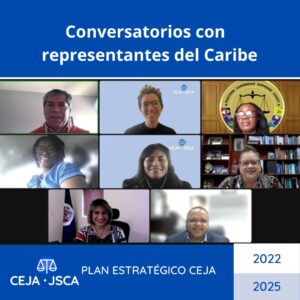
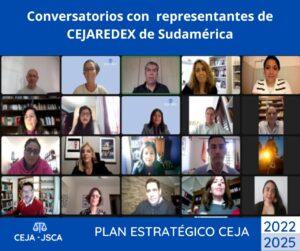
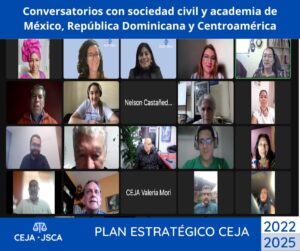
 In the context of the participatory development of its 2022-2025 Strategic Plan, JSCA held ten discussions with key stakeholders from the four sub regions of the Americas. Some 200 representatives of justice system institutions -judiciaries, justice ministries, prosecution services, public defense services, prison institutions and police entities- as well as civil society organizations and the academic sector and members of the JSCA Alumni Network participated in the events.
The discussions were organized by sub region: Mexico, the Dominican Republic and Central America; South America; the Caribbean; and Canada and the United States. JSCA will use this sub regional perspective to address the specific priorities and challenges of each sub region in the American continent.
.
The discussions yielded numerous valuable contributions from key stakeholders regarding the main challenges facing justice systems in the Americas. The exchanges also offered an opportunity to share opinions on priority topics, tools, lines of action and spaces for collaboration on the work that JSCA will develop in the coming years. The amount of information received, perspectives on the challenges presented and numerous requests for collaboration reaffirm the importance of JSCA’s mission.
The participatory development of the plan contributes to the Center’s efforts to ensure that it responds to the real needs and demands of the region’s justice systems. The discussions made clear the importance of having a strategic plan for responding to the changing reality of the justice systems of the Americas. The plan will help JSCA to address new topics and expand on others.
 JSCA is grateful to everyone who participated, contributing valuable suggestions and information that will be critical to the entity’s efforts to define its objectives, goals and priority topics for the coming years.
JSCA also reaffirms its commitment to systematize all of the contributions received for the development of the 2022-2025 Strategic Plan in order to generate collaborative work and achieve effective, inclusive and independent justice in the Americas.
Finally, JSCA would like to reiterate its call for all interested parties to contribute to this process by participating in the virtual consultation, which will be available
online through May 30.