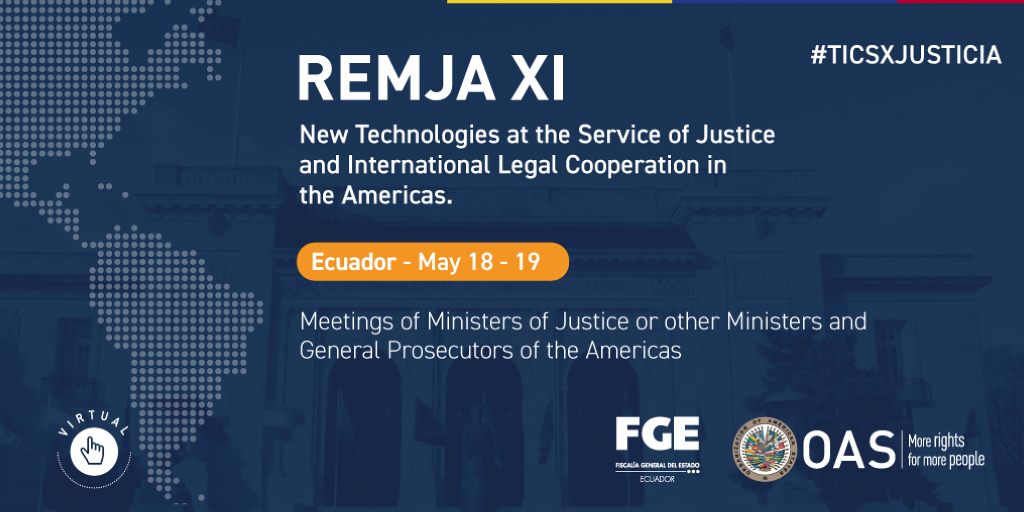
At the XI Meeting of Ministers of Justice or Other Ministers and Attorneys General of the Americas (REMJA), JSCA Executive Director Jaime Arellano called on member states to energetically work on and develop the components that the region’s justice systems need to guarantee effective access to it to all individuals and noted that digitalization will play a key role in that process.
According to the Chilean attorney, Latin America is facing important challenges in the area of digitalization of its judicial systems. Arellano noted that there are important gaps in this area and in matters related to gender, procedure models and the limited development of comprehensive alternative dispute resolution methods.
“We must identify and address people’s priorities and needs, not those of attorneys and justice operators,” he said.
He also encouraged member states to make a strategic investments in access to justice (IDEA-J),which involves geographic solutions related to, for example, promoting virtual justice community centers, mobile legal aid programs or legal aid apps. “Electronic processing does not mean digitizing paper files.”
He also highlighted the contributions of Artificial Intelligence (AI) to justice. “It is already here, and it can be used to support the design of dispute resolution models, operations and case management, and affirmative and decisive functions in the judicial realm,” he stated during his presentation.
The forum, which is the most important regional political and technical space for issues of justice and judicial cooperation, the exchange of experiences, coordination on public policy and strengthening the rule of law in the Americas, was presided over by Ecuador’s Attorney General, Dr. Diana Salazar Méndez. In addition to highlighting initiatives to combat corruption, drug trafficking and crimes related to the public health crisis, she noted the modernization processes that member states must undertake.
This meeting ended on May 19.
Watch the XI REMJA online at: