JSCA’s Executive Director, Nataly Ponce Chauca, visited Washington DC to meet with a number of strategic actors, including Ambassador Frank Mora of the U.S. Mission to the OAS, Ambassador Hugh Adsett of the Canadian Mission to the OAS, Luis Almagro, Secretary General of the OAS, representatives of cooperation agencies, civil society organizations, businesses, foundations, among other institutions, to discuss possible alliances within the framework of JSCA’s strategic work to strengthen justice systems, the Rule of Law and democracy in the Americas.
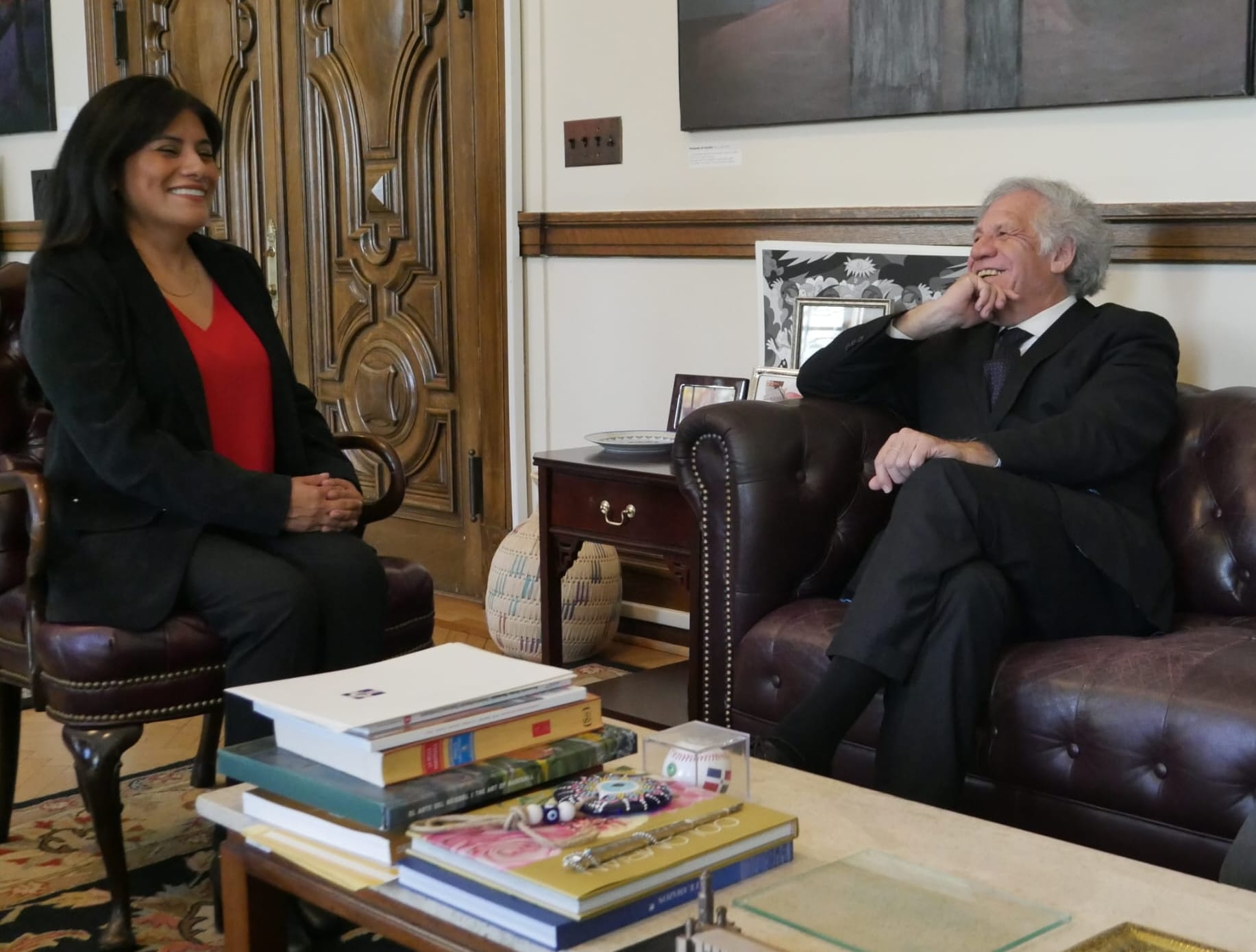 The purpose of the meeting with the OAS Secretary General was to strengthen ties between the current JSCA administration and the OAS, which is JSCA’s founding organization, and to present the JSCA Strategic Plan for 2022-2026. On this occasion, the Secretary General of the OAS, Luis Almagro, recognized the important work that JSCA has done in the region in its 23 years of operation. In addition, the work that JSCA has been implementing with a people-centered approach to justice, the efforts to promote women’s access to justice from an intersectional perspective, and the work with a focus on other vulnerable groups were also highlighted. They also discussed the event that JSCA will hold in the framework of the OAS General Assembly. Finally, the Secretary General endorsed JSCA’s important work to strengthen justice, the rule of law and democracy in the Americas.
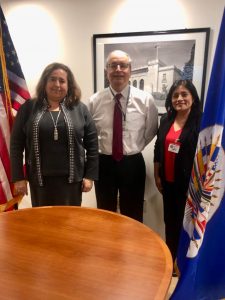 JSCA’s Executive Director, Nataly Ponce, together with the Counselor representing the United States, Jenny Murphy, met with Ambassador Frank Mora, the new U.S. representative of the U.S. Mission to the OAS. The ambassador recognized the value of JSCA’s work throughout its more than two decades of experience. JSCA’s Executive Director, Nataly Ponce, pointed out that JSCA is the OAS body specialized in justice issues, a pioneer in criminal and civil procedural reforms in the region, which has trained justice operators in more than 25 countries. The Ambassador recognized the value of JSCA in strengthening the rule of law and democracy in Latin America from a human rights perspective, in line with the values and purposes of the U.S. government’s efforts in the Americas.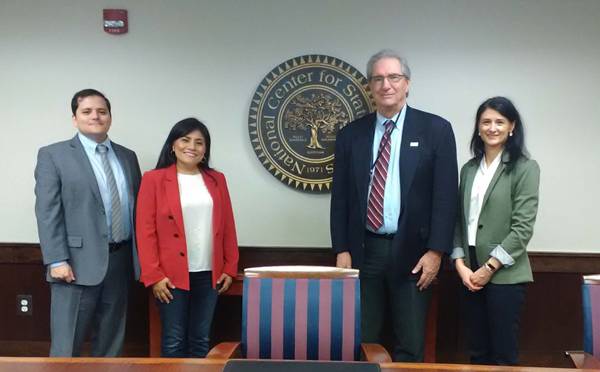
In the meeting with Canadian Ambassador Hugh Adsett, representative of Canada’s mission to the OAS, the main challenges in the area of justice in the Americas were discussed. They also discussed the extensive relationship that the Canadian government has had with JSCA, particularly through the project with Global Affairs Canada to support criminal and civil justice reforms in the region, which generated an important alliance for the improvement of justice systems in Latin America and the Caribbean.
JSCA would like to thank Councilor Jenny Murphy for her efforts in arranging meetings with U.S. organizations. Likewise, JSCA is grateful for the openness of all the institutions that received the Executive Director during her visit to Washington and expresses its willingness, within the framework of the implementation of the JSCA Strategic Plan 2022-2026, to continue to expand its work in conjunction with key actors and networks.
The Justice Studies Center of the Americas (JSCA) is an intergovernmental body of the Inter-American System with technical and operational autonomy, created by the OAS General Assembly in 1999, whose mission is to support the processes of reform and modernization of the systems justice in the Americas.
JSCA provides technical assistance to governments, judiciaries, public ministries and other justice institutions; prepares technical studies and generates empirical evidence; facilitates cooperation processes at the regional level; and provides specialized training to justice policymakers and operators in the countries of the Americas.