In the context of the project “Improving Access to Civil Justice in Latin America” with the support of Global Affairs Canada (GAC)
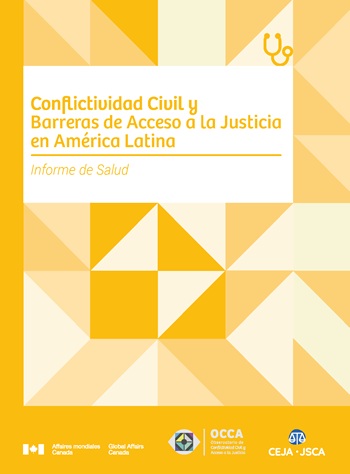
The Observatory on Civil Conflict and Access to Justice (OCCA) -created by the Justice Studies Center of the Americas (JSCA)– presented the results of its fourth thematic report, “Civil conflict and barriers to access to justice in Latin America.” The report was developed over the course of 2020 in Chile, Colombia, Argentina, Brazil, El Salvador, Mexico and Paraguay.
The report is the result of research focused on the analysis of access to justice in justiciable problems that are generated in the context of healthcare -availability, accessibility, quality and acceptability.
JSCA Research and Projects Director Marco Fandiño stated that the information presented in the report allows the reader to identify the main barriers to access to justice in Latin America in disputes related to the exercise of the right to healthcare.
“The analysis presented in the report is particularly important given the worsening of these problems due to COVID-19,” he said.
Alejandra Bocardo, a researcher and the Coordinator of OCCA, noted that the results contained in the fourth thematic report on healthcare contribute a series of elements for reflecting on the positive and negative effects that the judicialization of the right to health can have on social justice.
“This reflection is key from the perspective of access to justice because it invites us to examine the role that justice systems can play in reducing inequities in the enjoyment of social rights. Collective mechanisms and structural discussions play a key role in these disputes,” she explained.
The report was drafted by the team of JSCA researchers based on data gathered by OCCA member organizations such as Argentina’s Civil Association for Equality and Justice (ACIJ); the Research Group on Fundamental Rights of the Pontificia Universidad Católica de São Paulo (PUC-SP) of Brazil; the Universidad Alberto Hurtado (UAH) Law School Program on Dispute Management and Resolution in Chile; the Commercial and Border Law Research Group of Colombia’s Universidad Francisco de Paula Santander (GIJCF-UFPS); the Foundation for Research for the Application of Law (FESPAD) of El Salvador; the University Human Rights Program’s Legal Clinic at Universidad Nacional Autónoma de México (PDUH-UNAM); and the Center for Judicial Studies (CEJ) of Paraguay.
Further details
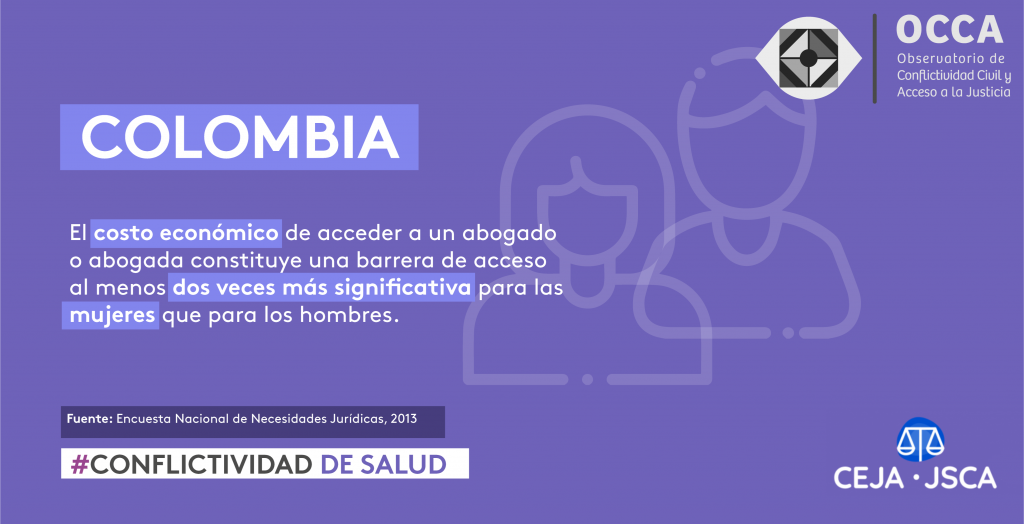
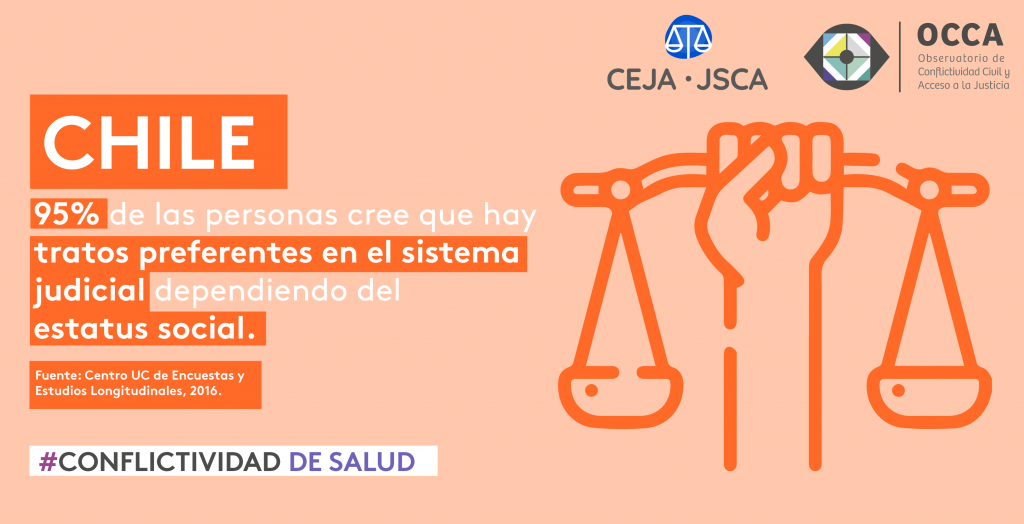
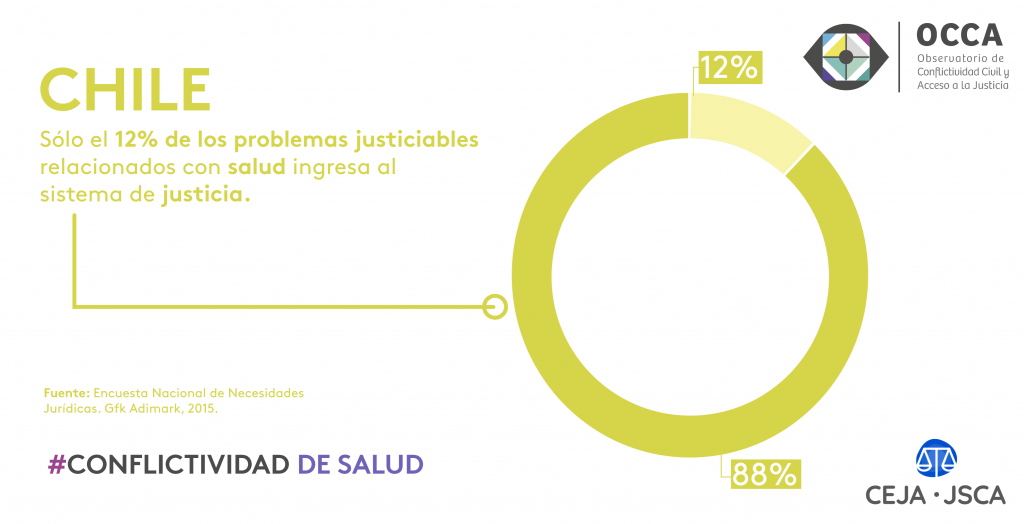
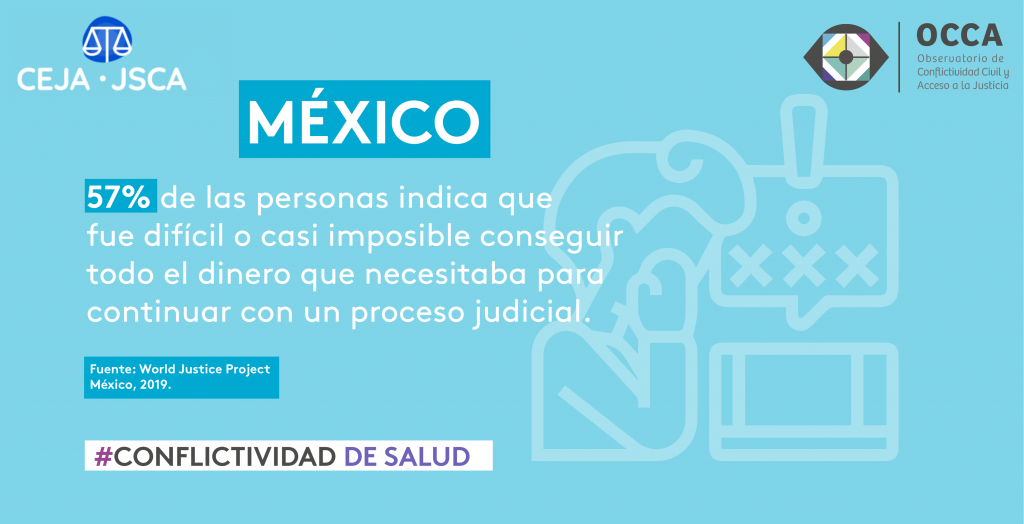
The report presents data on the prevalence and type of justiciable problems related to the right to healthcare that the population experiences in seven Latin American countries; the way in which the right to healthcare has been included in conventional, constitutional and regulatory plans; dispute management mechanisms for justiciable problems related to healthcare; institutional, social, economic and cultural barriers that stand in the way of access to said mechanisms; and the ways in which barriers to access to justice affect vulnerable populations.
The authors also emphasize the tensions that emerge between individual and collective visions of access to justice. In that sense, it states that the majority of the justiciable problems that enter justice systems are routine in nature and are not meant to impact the structural causes of the high prevalence of the aforementioned difficulties.
Furthermore, it states that available administrative and judicial mechanisms for addressing justiciable challenges related to the right to healthcare are fragmented, which stands as an obstacle to the right to health of vulnerable populations.
The Health Report: “Civil conflict and barriers to access to justice in Latin America” was conducted in the context of the project “Improving Access to Civil Justice in Latin America” in collaboration with Global Affairs Canada (GAC).
Download the report here (In spanish)
Check out the following study infographics (in spanish):