
This week, 10 judges from the Judicial Branch of the State of Querétaro, Mexico, made a visit to Chile organized by JSCA, with the aim of learning about how orality works in family justice and acquiring useful knowledge to put it into practice in their country. , identifying and analyzing the main challenges that will arise with its implementation, including logistical, training and cultural aspects. 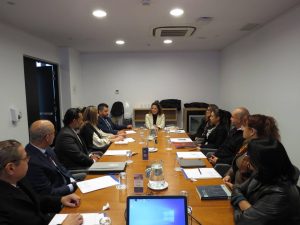
On Monday, the delegation participated in keynote presentations by Nataly Ponce, Executive Director of CEJA, Lorena Espinosa, Director of Studies and Training of the same institution, and Lorena Bruna, President of the Center for Precautionary Measures, in addition to taking guided tours with observation of hearings in the Third Family Court of Santiago. The objective of the talks was to convey JSCA’s experience on the importance of modifying the institutional culture and judicial management in any judicial reform process, providing key guidelines for successful implementation.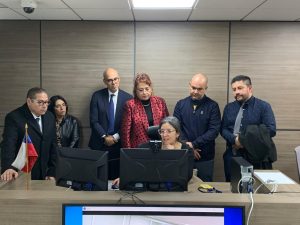
Subsequently, visits were made to the Center for Precautionary Measures, a new observation of hearings in the Third Family Court of Santiago and a visit to the Arbitration and Mediation Center (CAM) with presentations by its Executive Director, Ximena Vial, and María Soledad Lagos, Head of the Mediation Unit. One of the fundamental aspects of the reform of civil and family justice that will be implemented in the State of Querétaro has to do with the strengthening of Alternative Conflict Resolution Methods, which is why the visit to the CAM was of utmost importance for the magistrates.
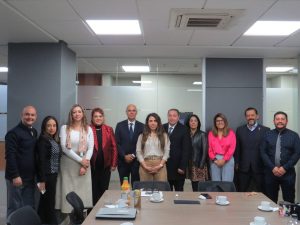
Marisela Sandoval López, Presiding Judge of the Family Chamber of the Superior Court of Justice of the State of Querétaro, tells of her experience during the visit: “The trip was wonderful. The course experience exceeded all my expectations and I took away a lot of knowledge and experiences. The opportunity to access expert speakers, to go to the courts and the mediation center to observe and learn about the work firsthand, is unique. I take with me an impressive amount of knowledge and a great responsibility to try to ensure that all the change, which includes legal issues, issues related to management systems and technology, can work as we see it working in Chile.”
César Segura, Consejero de la Judicatura del Poder Judicial del Estado de Querétaro, refuerza lo señalado por la magistrada Marisela Sandoval respecto a la visita: “Fue una experiencia muy enriquecedora, es la primera vez que vengo a Chile y desde el punto de vista de los conocimientos me voy con un panorama y una visión de mayor entendimiento respecto a la implementación de un sistema de audiencias, y comprendiendo mejor cómo transitar de un sistema escrito a uno oral”.
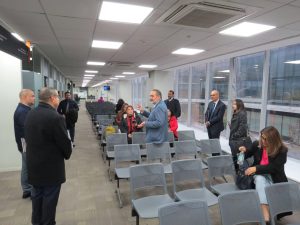
Al finalizar, las y los magistrados del Estado de Querétaro participaron en charlas realizadas por el equipo de CEJA y un conversatorio con Jorge Sáez, Fiscal Judicial de la Corte Suprema, que tuvo como objetivo ser una instancia para una reflexión final integral de la visita de esta delegación de magistrados y magistradas. En la instancia los y las magistradas discutieron los diversos desafíos que enfrentarán al implementar el nuevo Código Procesal Civil y Familiar.