Programs and Training
Discover CEJA's academic offerings
With over 26 years of experience, we know that no judicial reform is sustainable without training programs that strengthen the skills and expertise of those who work within the justice system. Our commitment is to promote the development of skills and innovative practices that will result in a more effective, accessible, and user-centered judicial service.
What do we offer?
- Training adapted to the needs of each country or institution and its context.
- Flexible modalities: face-to-face courses, virtual (synchronous and asynchronous), hybrid courses and study trips.
- Exchange of experiences among justice operators in the region, promoting knowledge of good institutional practices.
CEJA Methodology
Our programs and courses are based on three fundamental pillars:
- Experiential learning
- Active learning. Competency-based approach.
CEJA's training combines spaces for exposure, reflection, practice, and constant feedback, generating applicable and sustainable learning for participants.
Guiding principles of CEJA's training methodology
- Quality and technical excellence
- Public policies with an interdisciplinary perspective
- Evidence-based knowledge and practical, applied orientation. Relevance to regional and national realities.
- Ethics and professional responsibility
- Innovative training with cross-cutting approaches: human rights, interculturality, gender and intersectionality
- Critical and proactive attitude based on evidence
- Co-creation and stakeholder participation
Main academic topics
CEJA's main academic themes address the most relevant and current challenges to justice in the Americas. Through a comprehensive approach, we promote analysis, innovation, and knowledge exchange in key areas for strengthening the rule of law, protecting human rights, and modernizing judicial systems.
- Civil Justice Reform
- Family Justice Reform
- Reform of Labor Justice
- Oral Litigation
- Economic Crime and Corruption
- Racketeering
- Gender Violence
- Prosecution of Environmental Crimes
- Judicial Decongestion
- Judicial Management and Case Management
- Open Justice
- Artificial intelligence
- Ethics and Judicial Integrity
- Independence of Judges and Prosecutors
- Restorative Justice
- LGBTIQANB+ rights
- Innovations in Judicial Systems
- Procedural Justice
- Collective Processes
- Alternative Dispute Resolution Mechanisms
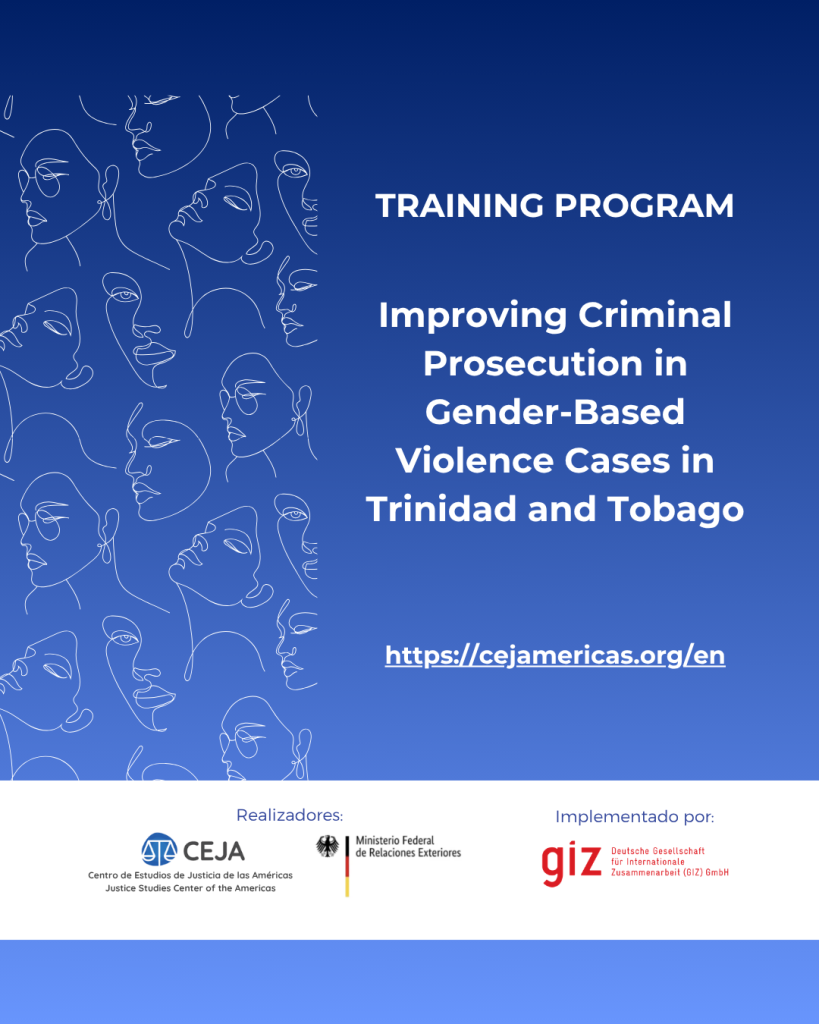
Training program “Improving Criminal Prosecution in Gender-Based Violence Cases in Latin America and the Caribbean”
Delivered in a hybrid format, the program combines virtual and in-person components to provide comprehensive training for prosecutors, police officers, judges, prison officials, as well as representatives from civil society and academia. Its goal is to enhance the investigation, prosecution, and victim support in gender-based violence cases, incorporating both a human rights perspective and a gender-sensitive approach.
The training promotes:
The integration of a gender perspective throughout the criminal process
The strengthening of case theory in complex investigations
Informed decision-making in alternative resolutions
The improvement of institutional practices through a rights-based approach
Through this in-person session, JSCA reaffirms its commitment to strengthening technical capacities and promoting specialized standards to improve criminal prosecution and enhance the protection of victims of gender-based violence across the region.
International Course “Investigating Corruption by Following the Money” in Trinidad and Tobago
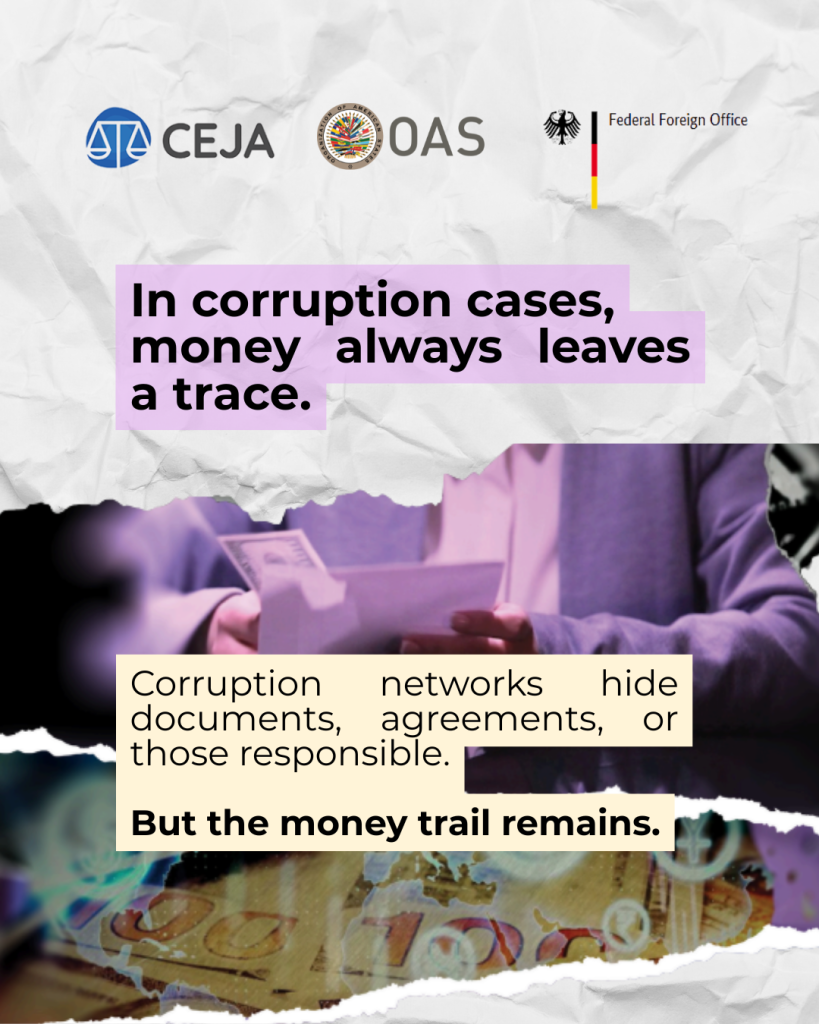
The Justice Studies Center of the Americas (JSCA/CEJA ) began on March 16th the implementation in Trinidad and Tobago of the international course “Investigating Corruption by Following the Money,” a training program aimed at strengthening investigative and prosecutorial capacities to address corruption cases in Latin America and the Caribbean.
The training was developed with the technical and financial backing of the German Federal Foreign Office to enhance the tools available to prosecutors and judges to effectively investigate corruption. The course’s topics include economic and financial crime investigation, forensic auditing, and asset forfeiture.
In Trinidad and Tobago the training is offered to professionals from the Office of the Director of Public Prosecutions (DPP), which is part of the Criminal Law Department of the Office of the Attorney General.
Through a hybrid format, participants will examine relevant legal frameworks, address common investigative challenges, and explore regional best practices for tracing money trails. The training enhances their ability to detect corruption networks and strengthens evidence in criminal investigations.
Through a methodology that combines theory and practice, participants will acquire tools over four weeks to:
- Understand applicable legal and regulatory frameworks
- Design efficient investigation plans
- Analyze financial and non-financial information
- Strengthen judicial cooperation at both national and international levels
a specialized digital space that facilitates continuous training in judicial matters.
This platform offers self-guided and assisted courses, international programs and courses,<br>
with updated content, multimedia resources and teaching support from regional experts.